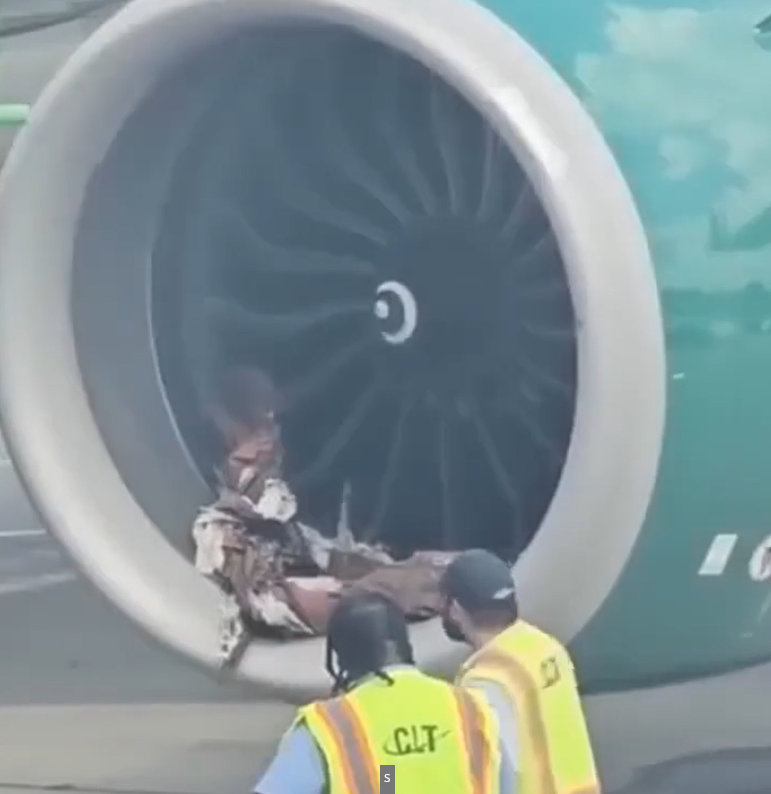
The video features an alarming close-up shot focusing entirely on the massive engine intake of a commercial airplane. The exterior of the large jet engine is painted a distinct and vibrant teal or light green color. Inside the engine, a chaotic tangle of white and brown shredded material is visibly trapped against the fan blades. The strange debris appears remarkably consistent with some kind of soft padding, luggage contents, or clothing items. This unusual material is tightly packed into the lower section of the dark gray rotating machinery. Standing directly in front of the engine are two airport ground crew members evaluating the intense damage. Both men are clad in bright yellow and orange reflective safety vests over their regular clothes. One worker wears a light blue uniform shirt with a bold “CLT” emblem printed across the back. The other crew member is wearing a dark t-shirt and a classic black baseball cap while observing. They appear deeply concerned as they examine the engine to assess the severity of the foreign object ingestion. A third person briefly walks into the bottom left corner of the frame before quickly moving away. The entire video remains completely silent, emphasizing the stark and serious nature of the technical incident. In the upper left corner of the video frame, a small “AI Generated” watermark is clearly visible. This subtle label suggests the striking scene may be a highly sophisticated digital simulation rather than a real event. Such lifelike visuals are often created to illustrate aviation safety hazards and engine failure scenarios for training. The crisp clarity of the simulation highlights the incredible power and potential danger surrounding jet propulsion. It visualizes how quickly loose materials on a runway can be drawn into a functioning aircraft engine. This type of severe foreign object damage is a critical concern for airline safety experts around the globe. The video effectively forces viewers to contemplate the structural vulnerability of complex mechanical systems. It presents a clear look at what happens when unintended materials breach the core of an aircraft. The metallic fan blades inside the housing remain completely stationary throughout the entire duration of the clip. The ground workers stand perfectly still, appearing completely frozen in a moment of intense inspection. The concrete tarmac underneath their feet is clean, gray, and typical of a standard commercial airport environment. The camera angle is positioned slightly low, looking up toward the massive scale of the teal engine. This specific perspective enhances the dramatic feel of the scene and makes the machinery look imposing. Aviation enthusiasts frequently share these kinds of realistic concepts online to spark technical discussions. The footage perfectly mimics the style of a casual, real-life smartphone recording taken by an onlooker. Every detail of the lighting on the metal surfaces is rendered with a high degree of precision. The subtle reflections on the green paint add another layer of authenticity to the visual narrative. It creates a powerful sense of suspense as viewers wonder about the story behind the simulated breakdown. The image stays tightly focused on the front of the jet engine without panning or zooming. This stable composition allows audiences to thoroughly analyze the compressed debris inside the fan mechanism. The contrast between the bright teal housing and the dark internal blades is visually striking. The workers’ bright safety apparel stands out sharply against the more muted tones of the airplane structure. This visual contrast draws immediate attention to the human element involved in responding to mechanical issues. The simulation reminds everyone of the strict protocols required to ensure flight readiness before every takeoff. It serves as a great educational tool for understanding the mechanics of a jet turbine intake. The total lack of motion creates a heavy, contemplative atmosphere within the short video segment. Viewers are left to imagine the immense sound and force that would accompany such an ingestion event. The digital rendering captures the complex textures of the crumpled fabric or padding with great accuracy. It demonstrates the advanced capabilities of modern computer-generated imagery in recreating real-world physics. The clip ends just as quietly as it began, leaving the workers to their perpetual inspection. This leaves a lasting impression regarding the importance of maintenance and vigilance in the aviation industry.