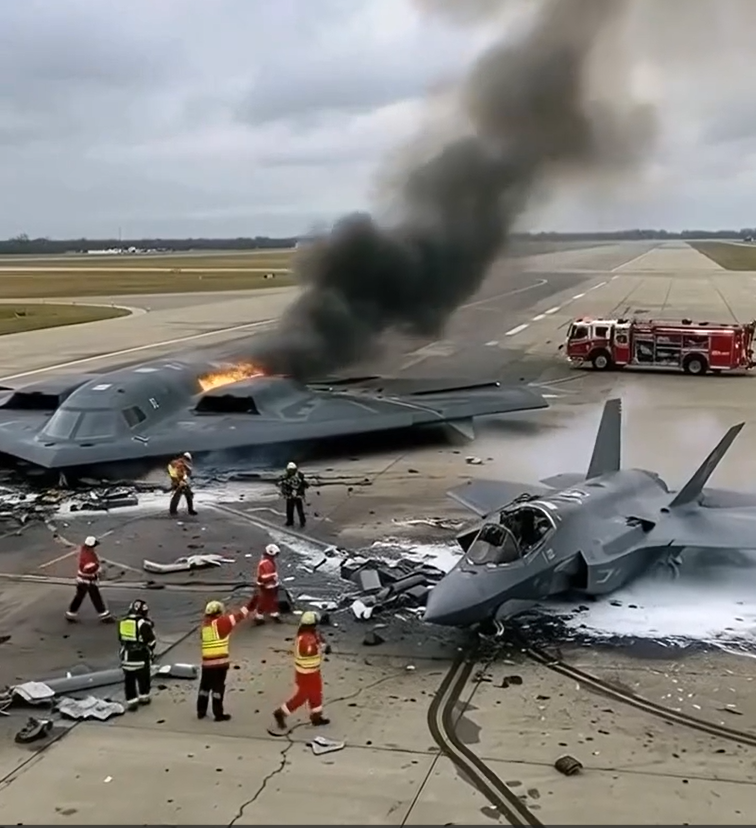
The military base became a scene of absolute chaos within a matter of seconds. Thick black smoke billowed heavily from the wreckage, dark and suffocating as it rose straight into the grey overcast sky. An active fire raged on the upper fuselage of a stealth bomber, its bright orange flames licking the charred metal hull ruthlessly. Right next to it, an advanced fighter jet sat grounded and heavily damaged, surrounded by scattering debris on the concrete tarmac. Firefighters and emergency personnel in bright high-visibility gear rushed across the scene frantically. Some responders wore silver protective suits designed to withstand extreme thermal conditions, moving with calculated urgency toward the heat source. A red fire engine sat parked in the background with its warning lights probably flashing, ready to pump more water onto the disaster area. White fire-retardant foam lay thickly over the pavement, covering the tracks and the damaged wing sections of the aircraft. Emergency workers positioned hoses to contain the blaze before it could reach the fuel tanks. One worker in a yellow jacket waved his arms aggressively, directing incoming support to the critical impact zones. Pieces of shattered glass, torn metal, and unidentifiable debris littered the immediate area, highlighting the severity of the accident. The entire airfield seemed frozen in a state of crisis as the thick plume of smoke drifted across the runway. Every second mattered as the ground crew fought to prevent an even larger explosion from occurring. The sheer scale of the damage suggested a catastrophic collision or an unexpected onboard system failure on the ground. Water sprayed from the hoses hissed loudly against the white-hot metal surfaces of the stealth aircraft. Two responders stood close to the nose of the fighter jet, assessing the cockpit integrity and checking for trapped crew members. The dense smoke column could likely be seen from miles away, signaling a major emergency at the facility. A trail of black soot and liquid foam snaked along the tire marks etched deep into the runway surface. Security teams likely cordoned off the perimeter to keep non-essential personnel away from the toxic fumes and potential blast zone. The firefighters worked in pairs, maintaining a steady grip on the high-pressure water lines despite the intense heat radiating toward them. One responder checked a nearby valve, ensuring a continuous supply of suppressant to the front lines. The silent intensity of the rescue operation felt incredibly heavy against the bleak, open landscape of the airfield. Foam continued to bubble and spread across the concrete, slowly smothering the smaller secondary fires beneath the wings. A supervisor in a red and yellow uniform pointed toward the tail section, identifying a secondary smoke source that needed immediate attention. The sleek, expensive lines of the advanced aircraft now looked tragic, twisted, and ruined amidst the emergency equipment. Debris from the wings formed a jagged path of destruction between the two multi-million dollar military assets. The wind caught the upper layers of the smoke cloud, stretching the dark trail far out over the horizon. Every individual on the ground focused entirely on their specific role, leaving no room for panic or hesitation. Foam trucks continued to apply layers of white chemicals to suppress any volatile fumes rising from the fuel lines. The structural damage to the stealth bomber appeared severe, with a gaping hole forming where the fire was most intense. Several emergency workers huddled briefly near the nose cone to coordinate their next tactical advance toward the cockpit. The grey sky offered a dim, dramatic backdrop to the brightly colored uniforms of the brave rescue teams. The sound of crackling flames and rushing water dominated the atmosphere as the battle against the fire continued. One firefighter knelt low to the ground, aiming his nozzle directly at the base of the main fuselage blaze. The entire incident commanded absolute attention, demonstrating how quickly a routine day on the tarmac can turn disastrous. Thick layers of foam now blanketed the fighter jet’s landing gear, preventing any spark from igniting the surrounding area. The black smoke showed no immediate signs of thinning, feeding constantly on the burning composite materials of the aircraft structure. A sense of grim determination showed in the posture of the emergency workers as they held their ground against the elements. The proximity of the two damaged jets created a highly complex and dangerous environment for the first responders. Scattered remnants of the aircraft skin lay melted and fused onto the scorched concrete tiles below. The firefighting effort appeared organized, disciplined, and relentless despite the clear danger of the situation. As the minutes ticked by, the teams successfully contained the perimeter of the fire, keeping it from spreading further outward. The dramatic scene served as a stark reminder of the inherent risks involved in high-tech military aviation operations on the ground.