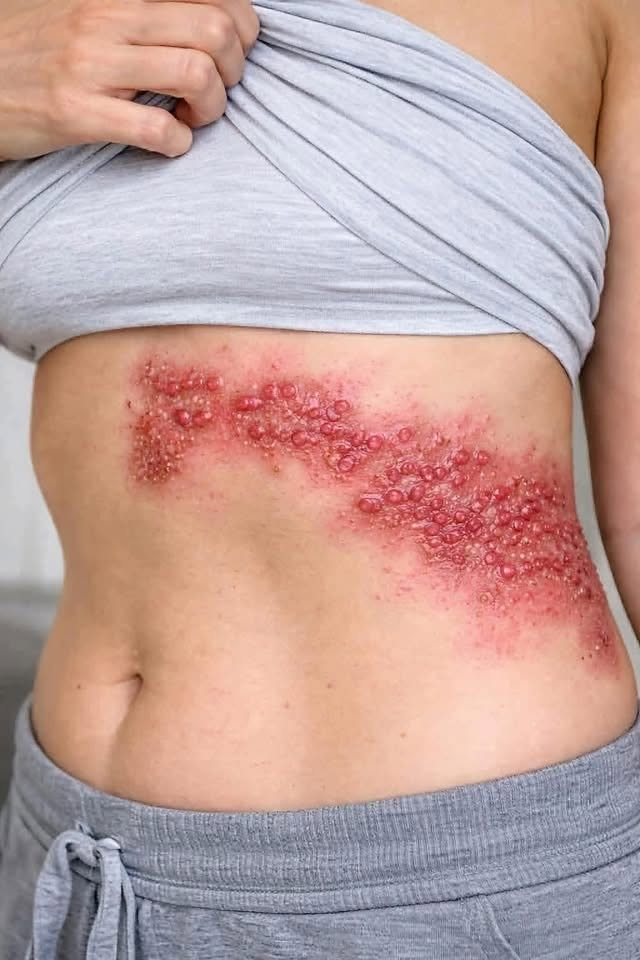
Many people experience pain, burning, or a strange rash on their skin and believe it is an allergy, a sting, or a simple passing irritation.
However, in some cases these symptoms may be related to a disease known as herpes zoster, popularly called “shingles”.
It is estimated that millions of people develop this condition each year, especially after the age of 50.
What is shingles?
Shingles is a disease caused by the reactivation of the chickenpox virus.
After overcoming chickenpox during childhood, the virus can remain dormant in the body for decades.
Over the years, certain factors can favor its reactivation.
Main causes and risk factors
Experts point out that several factors can increase the risk of developing shingles.
- Age over 50 years.
- weakened immune system.
- Prolonged stress.
- Chronic diseases.
- Treatments that reduce the immune system.
- History of chickenpox.
The first symptoms that often go unnoticed
Before the characteristic rash appears, many people experience signs that can be mistaken for other problems.
The most common symptoms include burning, tingling, skin sensitivity, localized pain, and itching.
Days later, small blisters usually appear clustered on a particular area of the body.
Why does it happen more often as we age?
Over the years, the immune system can lose some of its ability to keep certain latent viruses under control.
This makes it easier for the virus responsible for chickenpox to reactivate and cause the disease.
For this reason, the incidence usually increases significantly in older adults.
Complications that may arise
Although many people recover without serious problems, some may develop significant complications.
One of the best known is postherpetic neuralgia, a persistent pain that can continue even after the skin lesions disappear.
That’s why it’s important to seek medical attention when the first symptoms appear.
Can it be prevented?
Currently, there are vaccines designed to reduce the risk of developing shingles and its complications.
Healthcare professionals can provide guidance on who is a candidate to receive them based on age and medical history.
When to see a doctor
It is recommended to consult a professional if painful blisters, intense burning, or a localized rash accompanied by persistent discomfort appear.
Early intervention can help reduce the duration of symptoms and decrease the risk of complications.
Why this topic went viral
Images of this disease often generate a great impact on social media due to its striking appearance, as many people are unaware that it can appear years after having had chickenpox.
This has sparked the interest of thousands of users seeking information about its symptoms and ways to prevent it.
Conclusion
Shingles is a condition that can especially affect people over 50 years of age and usually begins with symptoms that many confuse with a simple irritation.
Recognizing early signs and seeking medical guidance can make a significant difference in recovery.
Being properly informed is essential to better understand this disease and to act promptly if you suspect anything.