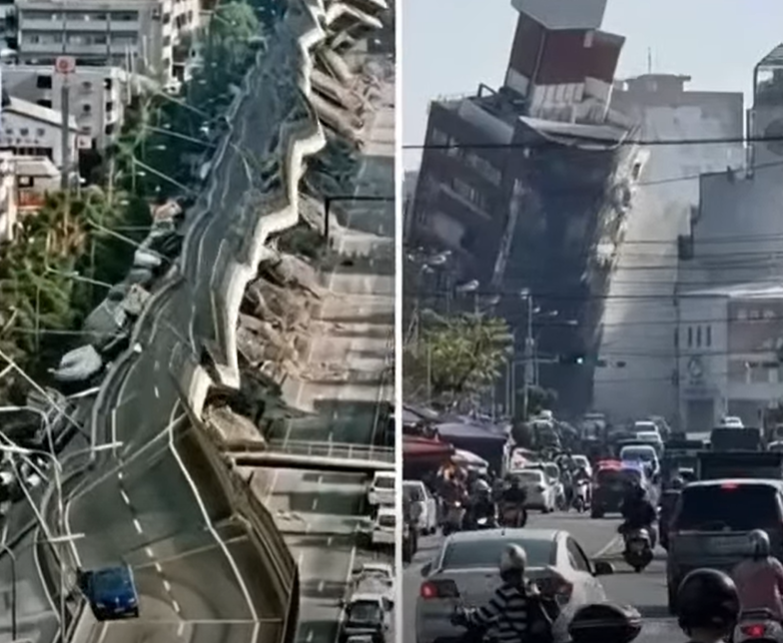
The video showcases a split-screen perspective capturing the terrifying and immense power of a major earthquake in real time. On the left side of the screen, an aerial view monitors a long elevated highway or overpass cutting through an urban area. The concrete structure of the road suddenly begins to ripple and bend violently as the seismic waves roll through the ground below. Vehicles on the highway are seen slowing down or coming to a complete halt as the surface beneath them warps dramatically. The intense shaking causes chunks of concrete and debris to tear away from the highway, creating bursts of dust. The entire roadway appears to deform into an undulating shape, shifting up and down like a wave on water. Dust clouds billow out from the joints of the elevated structure as it strains under the massive environmental forces. Several cars on the lower side road are lined up, completely still as drivers witness the infrastructure breaking apart above them. The movement of the highway is smooth yet incredibly violent, illustrating the raw and unstoppable force of nature. Meanwhile, the right side of the split-screen captures a ground-level view of a bustling city street filled with traffic. In the background of this street, a tall multi-story building begins to tilt dangerously to one side. The building is heavily leaning over the lower structures and the roadway, looking as if it could collapse at any moment. Plumes of thick grey dust and debris erupt from the base and sides of the structure as its foundation fails. People on motorcycles and in cars fill the foreground, some stopping to look up at the collapsing high-rise. The stark contrast between the normal daily commute and the sudden catastrophe creates a deep sense of urgency and panic. The structural damage to the building appears severe, with entire floors visibly shifting and breaking apart as dust fills the air. The video remains steady, allowing for a clear and shocking documentation of the concurrent disasters in different parts of the area. On the left, the wavy motion of the concrete road reaches its peak intensity before the video sequence loops. On the right, the dust cloud expands rapidly, partially obscuring the leaning building from the view of the commuters below. The sky in both shots appears clear and bright, making the sudden onset of the destructive earthquake even more jarring. The vehicles on the right side are tightly packed, leaving little room for a quick evacuation or escape from the falling debris. The structural design of the highway appears completely compromised as large sections are displaced from their original alignment. The tilting building on the right looks like a prominent commercial or residential apartment complex in a densely populated district. The footage provides a dramatic illustration of how quickly modern infrastructure can be devastated by a large-scale natural disaster. The movement of the dust clouds on both sides indicates the high speed and impact of the collapsing materials. The lower roads next to the highway are lined with trees and small buildings that also shake during the tremor. The commuters on scooters in the right frame appear vulnerable as they sit directly in the potential path of the leaning structure. The video effectively combines two distinct viewpoints to give a comprehensive look at the widespread impact of the event. The left side emphasizes the failure of civil engineering and transportation infrastructure under extreme stress. The right side emphasizes the immediate danger posed to human life and urban dwellings during the structural collapse. The rolling dust from the highway resembles small explosions along the joints of the concrete pillars. The building on the right remains precariously balanced at a sharp angle, defying gravity for the duration of the clip. The intense visual information captured in the short video highlights the necessity of earthquake-resistant design in urban planning. The overall atmosphere is one of sheer shock as a normal afternoon is instantly transformed into a survival situation. The clear definition of the video allows viewers to see individual cars and the reactions of the traffic flow. The splitting of the concrete on the left side shows the immense tension and compression forces acting on the road. The expansion of the dust cloud on the right signifies that major internal components of the building are giving way. The footage serves as a stark reminder of the unpredictable and chaotic nature of major tectonic movements. The video concludes with both scenes reaching a high point of destruction, leaving the final aftermath to the imagination.